2026 Nobel Prize in Chemistry: Henri Kagan, a Triumph for Paris-Saclay
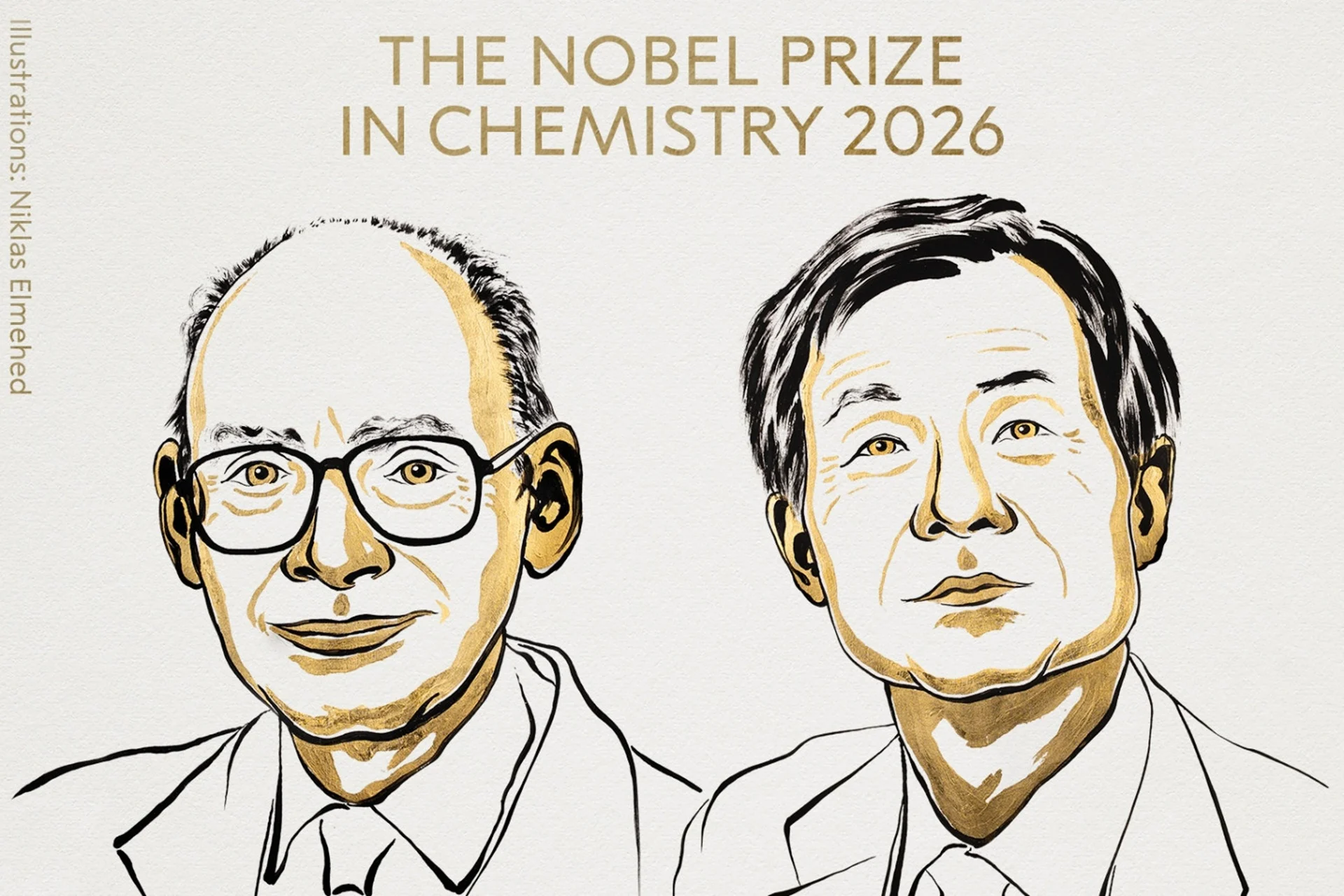
The 2026 Nobel Prize in Chemistry has been awarded to Henri B. Kagan, Professor Emeritus at Université Paris-Saclay, and Japanese chemist Kenso Soai. Announced on October 7, this distinction recognises major discoveries in molecular asymmetry and asymmetric organic synthesis.
A fundamental breakthrough with practical applications
Molecules can exist in two forms that are mirror images of one another, much like a left hand and a right hand. This property, known as chirality, plays a crucial role in living organisms and in the design of medicines. In chemistry, obtaining the correct molecular form is essential, as two forms of the same molecule can have different biological effects.
Henri Kagan’s work on nonlinear effects, which began in the 1980s, helped advance our understanding of how molecular asymmetry can be amplified. Kenso Soai subsequently contributed to these advances through his research on autocatalysis. Together, their discoveries opened up new possibilities for synthesising chiral molecules, particularly in the pharmaceutical industry.
Paris-Saclay, a hub of scientific excellence
This Nobel Prize puts the Paris-Saclay scientific ecosystem firmly in the spotlight. Henri Kagan spent much of his career in Orsay, at the Institute of Molecular Chemistry and Materials of Orsay (ICMMO), affiliated with Université Paris-Saclay and the French National Centre for Scientific Research (CNRS). His research illustrates the power of fundamental science to drive major advances in industry and medicine.
The distinction also highlights the importance of an environment in which universities, national research organisations, laboratories and industrial partners work together to advance knowledge and train the next generation of scientists.
By recognising Henri Kagan, the 2026 Nobel Prize in Chemistry celebrates an exceptional career and reinforces Paris-Saclay’s position among the world’s leading scientific hubs, where tomorrow’s breakthroughs are taking shape.